Trading Quotes: 25 Checked at the Source, 20 Traced to a Book, 15 Unverified
25 quotes on losses, patience, crowds, cycles and forecasting from Lefèvre's Reminiscences, Buffett's letters, Templeton, Howard Marks, Peter Lynch and Keynes, plus lines by Graham and Kindleberger that they quote, each traced to its source with the trading rule it teaches. Then 35 popular lines by traders such as Ed Seykota, Paul Tudor Jones, Marty Schwartz and Mark Douglas: 20 traced to a book, 15 marked attribution unverified.

On this page
- Quotes about losses and risk
- Quotes about patience and overtrading
- Quotes about crowds, fear and greed
- Quotes about cycles and history
- Quotes about forecasts and humility
- Quotes from famous traders, traced to a book or unverified
- Who said these lines
- Popular quotes left out, and why
- How to turn a quote into a trading rule
- Frequently asked questions
The trading quotes worth keeping are the ones that change a decision: Lefèvre's "Instead of hoping he must fear" on cutting losses, Buffett's "be fearful when others are greedy" on crowds, and Lynch's "right six times out of ten" on accepting losses. Below are 25 such quotes, each traced to the book, shareholder letter, memo or interview it comes from, grouped by the trading problem it helps with and paired with the rule it illustrates. After them come 35 popular lines by famous traders: 20 traced to a book, 15 marked attribution unverified. Then the famous lines that did not survive the check.
How we checked. For every quote below we opened the original text (a Project Gutenberg edition, a letter on the Berkshire Hathaway site, a PDF from the publisher, a published interview) and matched the wording. Where only a reliable secondary citation exists, the caption says so. Quotes we could not trace to a primary text are either kept in their own section, marked attribution unverified, or left out; the last section explains the main cases.
Quotes about losses and risk
The first group is about cutting losses and about the price you pay.
Instead of hoping he must fear; instead of fearing he must hope. He must fear that his loss may develop into a much bigger loss, and hope that his profit may become a big profit.
The rule it illustrates: a losing trade is closed at the level your plan set before entry, and a winning trade is not cut just because it shows a profit. Write the stop down before you click, as covered in the guide to stop loss orders.
Remember that stocks are never too high for you to begin buying or too low to begin selling. But after the initial transaction, don't make a second unless the first shows you a profit. Wait and watch.
The rule it illustrates: add to a position only when it is already working. Averaging down on a loser doubles the bet on the idea the market is rejecting. The mechanics are in scaling in and out of trades.
Adding to a winning position, and only to a winner

It's not what you buy, it's what you pay that counts. Good investing doesn't come from buying good things, but from buying things well.
The rule it illustrates: the entry price decides the risk. A great company bought after a vertical run leaves a far worse risk/reward ratio than the same company bought in a quiet base.
It's far better to buy a wonderful company at a fair price than a fair company at a wonderful price.
The rule it illustrates: a cheap price does not repair a weak setup. Quality first, then price.
Big opportunities come infrequently. When it's raining gold, reach for a bucket, not a thimble.
The rule it illustrates: keep risk small on ordinary trades so that capital and nerve are still there when a rare, well defined setup appears. The size of each bet comes from your position sizing rule, not from excitement.
Quotes about patience and overtrading
The second problem is activity: trading because the market is open, not because there is a setup. Patience is a skill you can train, as the guide to patience and discipline in trading explains.
After spending many years in Wall Street and after making and losing millions of dollars I want to tell you this: It never was my thinking that made the big money for me. It was always my sitting. Got that? My sitting tight! It is no trick at all to be right on the market.
The rule it illustrates: once a trade is on and the reason for it still holds, the job is to do nothing. Exits follow the plan, not boredom.
One way to sit tight is to let a stop follow the trend instead of taking profit at a fixed target.
Fixed stop versus trailing stop

There is the plain fool, who does the wrong thing at all times everywhere, but there is the Wall Street fool, who thinks he must trade all the time.
The rule it illustrates: no setup, no trade. A day without a position is a normal day.
The desire for constant action irrespective of underlying conditions is responsible for many losses in Wall Street even among the professionals, who feel that they must take home some money every day, as though they were working for regular wages.
The rule it illustrates: trading results do not arrive as a salary. A daily profit target pushes you into trades the market is not offering; the guide on the dangers of overtrading lists the warning signs.
Costs make the point in numbers. Assume each round trip costs 0.1% of the position in commissions and spread, and the whole account is traded each time: the bars add up that cost over a year of 252 sessions, before any gain or loss.
Yearly trading cost at 0.1% per round trip

For investors as a whole, returns decrease as motion increases.
The rule it illustrates: every round trip pays a spread and a commission. Count them in your journal and you will see what activity costs. Buffett applies the same patience off the market: he still lives in the Omaha home he bought in 1958, described on our Warren Buffett house page.
Quotes about crowds, fear and greed
Prices are made by people, and people move in herds. These quotes describe the psychology behind tops and bottoms.
we simply attempt to be fearful when others are greedy and to be greedy only when others are fearful.
The rule it illustrates: read sentiment as a contrary signal at extremes, not as a timing tool on its own. The article on fear and greed in trading shows how both emotions show up in your own decisions.
The line describes the turn of the crowd’s mood that the classic chart of market emotions draws: greed near the top, fear near the bottom.
The cycle of market emotions

Bull markets are born on pessimism, grow on skepticism, mature on optimism and die on euphoria.
The rule it illustrates: the mood of the crowd tells you roughly where you are in the cycle. When everyone you know agrees, ask who is left to buy.
If you buy the same securities everyone else is buying, you will have the same results as everyone else.
The rule it illustrates: an edge has to come from somewhere. If your entry is the most crowded trade on social media, the edge is probably not yours.
There is nothing so disturbing to one's well-being and judgment as to see a friend get rich.
The rule it illustrates: envy is a signal to slow down, not to buy. That feeling has a name in trading: FOMO.
Worldly wisdom teaches that it is better for reputation to fail conventionally than to succeed unconventionally.
The rule it illustrates: Keynes's point is that professionals have a reason to follow the crowd: being wrong alone costs a career more than being wrong together. When everyone acts on that reason, a crowded move can run further than the facts justify.
We have reached the third degree where we devote our intelligences to anticipating what average opinion expects the average opinion to be.
The rule it illustrates: short term prices move on what traders expect other traders to do, which is why the same news can lift one stock and sink another. The idea behind buy the rumor, sell the news comes from here.
Keynes's beauty contest, three degrees

Quotes about cycles and history
Booms and busts repeat with new names. Several of the most quoted investors said the same thing in different decades.
Another lesson I learned early is that there is nothing new in Wall Street. There can't be because speculation is as old as the hills. Whatever happens in the stock market to-day has happened before and will happen again.
The rule it illustrates: study old charts and old crashes. The setups repeat because the people behind them do; the guide to market cycles shows the four phases that keep coming back.
The investor who says, "This time is different," when in fact it's virtually a repeat of an earlier situation, has uttered among the four most costly words in the annals of investing.
The rule it illustrates: when a story explains why old valuation rules no longer apply, treat it as a warning, not as a reason to buy.
In the third stage, after a period in which the economic news has been great, companies have reported soaring earnings, and stocks have appreciated wildly, everyone concludes that things can only get better forever.
The rule it illustrates: the third stage is where risk is highest and feels lowest. Tighten stops and cut size when the news is unanimously good.
The four phases of a market cycle

In the short run, the market is a voting machine; in the long run, however, it becomes a weighing machine.
The rule it illustrates: match the reason for a trade to its horizon. A sentiment trade is a short trade; a valuation argument needs years, not days.
Templeton’s and Marks’s cycles are visible on any long chart. The one below marks every move of 20% or more in the S&P 500 ETF over the last 250 months: each fall was followed by a new rise, at an interval nobody could have dated in advance.
Moves of 20% or more in the S&P 500 ETF, monthly bars

- Price, monthly candles (hollow up, filled down)
- ZigZag, swings of 20% or more (fixed) (solid line)
- Last leg, still able to change (dashed line)
Quotes about forecasts and humility
Nobody knows what the market will do next. The best investors say so openly, and build their methods around it.
In this business if you're good, you're right six times out of ten. You're never going to be right nine times out of ten.
The rule it illustrates: plan for being wrong four times out of ten. A strategy only works if the winners pay for the losers, which is the whole point of trading math.
I've always said if you spend 13 minutes a year on economics, you've wasted 10 minutes.
The rule it illustrates: macro forecasts rarely help a single trade. Spend the time on the chart and the plan you control.
Being right six times out of ten is enough only if the winners are at least as large as the losers. The bars show the win rate at which a strategy breaks even, before costs, for different ratios of average win to average loss.
Win rate needed to break even, by reward to risk

I deal in facts, not forecasting the future.
The rule it illustrates: react to what price does at your levels instead of betting on what it should do.
I don't remember anybody predicting the market right more than once, and they predict a lot.
The rule it illustrates: a famous call is not a track record. Judge a forecaster by all the calls, not the one that went viral.
Being too far ahead of your time is indistinguishable from being wrong.
The rule it illustrates: a correct idea with the wrong timing still loses money. Every position needs an exit that does not depend on being proven right eventually.
Your business with the tape is now--not to-morrow. The reason can wait. But you must act instantly or be left.
The rule it illustrates: when price hits your exit level, execute first and analyze afterwards.
Quotes from famous traders, traced to a book or unverified
The earlier version of this page listed more than 200 lines credited to famous traders. Readers still look for many of them, so the 35 most searched are back below, worded as the earlier version printed them, or as the book prints them where we found it. For 20 of them, we found a distinctive phrase of the line in the full text of a book, named in the caption: the source is right, but the wording around that phrase was not compared word for word, so read it as close to the book rather than exact. The other 15 are marked attribution unverified: read the wording as a paraphrase, and the name as the person the line is usually credited to, until a primary source turns up. Dashes inside two of the lines are printed as colons.
Each line below went through the same check, summed up here.
How each trader quote on this page was checked

Michael Marcus
Every trader has strengths and weakness. Some are good holders of winners but may hold their losers a little too long. Others may cut their winners a little short but are quick to take their losses. As long as you stick to your own style, you get the good and bad in your own approach.
When in doubt, get out and get a good night's sleep. I've done that lots of times and the next day everything was clear… While you are in [the position], you can't think. When you get out, then you can think clearly again.
Victor Sperandeo
The key to trading success is emotional discipline. If intelligence were the key, there would be a lot more people making money trading… I know this will sound like a cliche, but the single most important reason that people lose money in the financial markets is that they don't cut their losses short.
Bill Lipschutz
If most traders would learn to sit on their hands 50 percent of the time, they would make a lot more money.
If a trader is motivated by the money, then it is the wrong reason. A truly successful trader has got to be involved and into the trading, the money is the side issue… The principal motivation is not the trappings of success. It's usually the by-product: simply stated, "the game's the thing".
Marty Schwartz
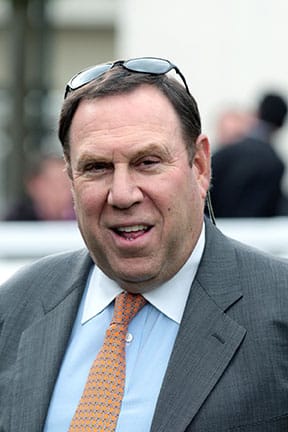
The career behind the name is covered in the profile of Marty Schwartz.
Learn to take losses. The most important thing in making money is not letting your losses get out of hand.
The arithmetic behind that advice: a loss needs a larger gain to be repaired, and the gap widens fast as the loss grows.
Gain needed to recover from a loss

Trading is a psychological game. Most people think they are playing against the market, but the market doesn't care. You're really playing against yourself.
I always laugh at people who say, "I've never met a rich technician." I love that! It's such an arrogant, nonsensical response. I used fundamentals for nine years and got rich as a technician.
I have learned through the years that after a good run of profits in the markets, it's very important to take a few days off as a reward. The natural tendency is to keep pushing until the streak ends. But experience has taught me that a rest in the middle of the streak can often extend it.
Mark Douglas
Why do you think unsuccessful traders are obsessed with market analysis? They crave the sense of certainty that analysis appears to give them. Although few would admit it, the truth is that the typical trader wants to be right on every single trade. He is desperately trying to create certainty where it just doesn't exist.
If you can learn to create a state of mind that is not affected by the market's behaviour, the struggle will cease to exist.
You create your own game in your mind based on your beliefs, intents, perception and rules.
William O'Neil
The whole secret to winning in the stock market is to lose the least amount possible when you're not right.
Letting your losses run is the most serious mistake made by almost all investors!
What seems too high and risky to the majority generally goes higher and what seems low and cheap generally goes lower.
Losing the least when you are wrong is partly a question of size. For any strategy with an edge, growth first rises with the share risked per trade, then falls, and turns into a loss when the bet is too large.
Account growth against the share risked per trade

Ed Seykota

The career behind the name is covered in the profile of Ed Seykota.
The elements of good trading are (1) cutting losses, (2) cutting losses, and (3) cutting losses. If you can follow these three rules, you may have a chance.
If you can't take a small loss, sooner or later you will take the mother of all losses.
Seykota made the same point with a coin in his essay on risk, covered in our Ed Seykota profile: the coin pays two to one, yet betting too large a share of the account on each toss still loses money. The size of the bet decides the outcome as much as the edge does.
Seykota's coin: equity after ten tosses by fraction bet

Trading systems don't eliminate whipsaws. They just include them as part of the process.
Win or lose, everybody gets what they want from the market. Some people seem to like to lose, so they win by losing money.
Paul Tudor Jones

Losers average losers.
What five to one does is allow you to have a hit rate of 20%. I can actually be a complete imbecile. I can be wrong 80% of the time, and I'm still not going to lose…
Every day I assume every position I have is wrong.
Bruce Kovner
I know where I'm getting out before I get in.
My experience with novice traders is that they trade three to five times too big. They are taking 5 to 10 percent risks on a trade when they should be taking 1 to 2 percent risks.
The cure Kovner points to is a size set by the stop, not by conviction: the distance to the stop and the share of the account you accept to lose decide how much you buy.
Position size from account risk and stop distance

Richard Dennis
The career behind the name is covered in the profile of Richard Dennis.
In the real world, it is not too wise to have your stop where everyone else has their stop.
Whatever method you use to enter trades, the most critical thing is that if there is a major trend, your approach should assure that you get in that trend.
You should expect the unexpected in this business; expect the extreme. Don't think in terms of boundaries that limit what the market might do.
Why a stop where everyone else has one gets hit

Alexander Elder
You have to identify your weaknesses and work to change. Keep a trading diary: write down your reasons for entering and exiting every trade. Look for repetitive patterns of success and failure.
A trading diary, and what its review shows

The goal of a successful trader is to make the best trades. Money is secondary.
Jack Schwager

Amateurs think about how much money they can make. Professionals think about how much money they could lose.
The hard work in trading comes in the preparation. The actual process of trading, however, should be effortless.
Tom Baldwin
The best traders have no ego. You have to swallow your pride and get out of the losses.
Linda Raschke
All you need is one pattern to make a living.
Nicolas Darvas
I believe in analysis and not forecasting.
Joel Greenblatt
As much as possible you don't want to be well paid merely for taking big risks. Anyone can manage that. You want to be well-paid because you did your homework.
Who said these lines
Reminiscences of a Stock Operator is a 1923 book by the journalist Edwin Lefèvre, told in the first person by a trader named Larry Livingston. The book is dedicated to Jesse Lauriston Livermore and is generally read as his story, which is why its lines are usually quoted as Livermore's. We credit the narrator and the author; the career itself is covered in the profile of Jesse Livermore.
Howard Marks writes memos to clients of Oaktree Capital, published free on the firm's site. The Marks lines here come from his memo On Bubble Watch, dated January 2025; lines attributed to him that we could not locate in a memo are left out. Peter Lynch's quotes come from his interview with the PBS program Frontline; Warren Buffett's from his annual letters to Berkshire Hathaway shareholders. The timeline puts the checked sources in order: the ideas are older than most traders assume. For Buffett's partner and Berkshire's vice chairman, see our Charlie Munger biography.
When the checked sources were published
Reminiscences of a Stock Operator, by Edwin Lefèvre, is published, dedicated to Jesse Livermore. Project Gutenberg
Keynes publishes The General Theory; chapter 12 holds the beauty contest passage. Marxists Internet Archive
Buffett's letter: be fearful when others are greedy. Berkshire Hathaway
Earliest known use of "the market can remain irrational", credited to A. Gary Shilling. Quote Investigator
Buffett's letter: a wonderful company at a fair price. Berkshire Hathaway
Jack D. Schwager publishes Market Wizards, the source of many trader quotes. Internet Archive
Templeton's 16 Rules for Investment Success first appear in World Monitor. Franklin Templeton
Buffett's letter: returns decrease as motion increases. Berkshire Hathaway
Buffett's letter: when it's raining gold, reach for a bucket. Berkshire Hathaway
Buffett's letter quotes Graham's voting machine and weighing machine. Berkshire Hathaway
Howard Marks's memo On Bubble Watch. Oaktree Capital
Popular quotes left out, and why
| Quote or group | Usually credited to | What the sources show |
|---|---|---|
| "The market can remain irrational longer than you can remain solvent." | John Maynard Keynes | Earliest known use in 1986, credited to the economist A. Gary Shilling; very weak evidence for Keynes, who died in 1946 and was linked to the line decades later (Quote Investigator). The idea is sound; the attribution is not. |
| "The four most dangerous words in investing are: this time it's different." | Sir John Templeton | His own wording, quoted above, is "the four most costly words", and his sentence is about the investor who says it. |
| "When everything seems to be going against you, remember that the airplane takes off against the wind, not with it." | Henry Ford | A kite version goes back to John Neal in 1846 (Quote Investigator); the airplane version appeared in the Country Parson newspaper panel by Frank A. Clark in 1955 (Barry Popik). |
| Lines from the Market Wizards interviews | Ed Seykota, Bruce Kovner, Paul Tudor Jones, Marty Schwartz and others | The most searched are in the section on famous traders: 20 were traced to a book, the rest are marked attribution unverified. The others stay off this page until we can check them. Their careers are covered in the profiles of Ed Seykota, Marty Schwartz and Richard Dennis. |
| Jim Simons quotes | Jim Simons | The lines circulating online did not appear in any transcript we could read, so none are kept. |
| Motivational lines | Celebrities, athletes, anonymous social media posts | Most had no traceable source, and the rest had little to do with trading. The line credited to the actor Anthony Hopkins, "We are dying from overthinking", is one of them: we found no source for it. |
How to turn a quote into a trading rule
A quote helps only if it changes what you do on the next trade. Pick the one that matches your most expensive mistake, rewrite it as a rule with a number in it (a maximum loss per trade, a maximum number of trades per day), and put it in your trading plan. If you prefer short statements you repeat before a session, the trading affirmations page works the same way. More on the mental side of trading is in the trading psychology section.
From a quote to a written trading rule

Frequently asked questions
Did Keynes say the market can remain irrational longer than you can remain solvent?
There is no good evidence that he did. Quote Investigator traces the earliest known use to 1986, credited to A. Gary Shilling, while Keynes died in 1946 (source).
Who said to be fearful when others are greedy?
Warren Buffett, in his 1986 letter to Berkshire Hathaway shareholders: "we simply attempt to be fearful when others are greedy and to be greedy only when others are fearful" (letter).
Did Jesse Livermore really say "it was always my sitting"?
The line comes from Reminiscences of a Stock Operator (1923), written by Edwin Lefèvre and narrated by Larry Livingston. The book is dedicated to Jesse Livermore and is read as his story, but the words are the narrator's.
What is the best trading quote for beginners?
Peter Lynch's "if you're good, you're right six times out of ten" is a good start: it sets the expectation that losses are normal and that the method, not any single trade, decides the result.
Why are some well known trading quotes missing?
This page leaves out quotes we could not match to an original text, except the most searched lines by famous traders, which are kept in their own section and marked attribution unverified. A line marked that way, or missing, is not necessarily false; it is unverified.
Sources
- Edwin Lefèvre, Reminiscences of a Stock Operator (1923), Project Gutenberg
- Berkshire Hathaway, letters to shareholders
- Sir John Templeton, 16 Rules for Investment Success, Franklin Templeton
- Howard Marks, On Bubble Watch, Oaktree Capital, January 2025
- Peter Lynch interview, PBS Frontline
- John Maynard Keynes, The General Theory, chapter 12
- Quote Investigator, "The market can remain irrational longer than you can remain solvent"
Passionate about finance, quantitative trading and data analysis. Amaury built the PatternsWizard test bench, which detects each pattern on full price history and measures what happened next against random entries.
PatternsWizard tests chart and candlestick patterns on full market history, against random entries. How we test patterns.